How Clear Communication Protects People and Projects
How Clear Communication Protects People and Projects
Many project problems do not begin with a lack of effort. They begin with a missed update, an unclear assignment, or an assumption that someone else already shared the information. In active restoration and reconstruction work, those gaps can affect safety, schedules, customer expectations, and the quality of the final result.
Clear communication is more than being polite or sending more messages. It means giving the right person useful information at the right time-and confirming that everyone understands what happens next.
Begin with a shared picture of the day
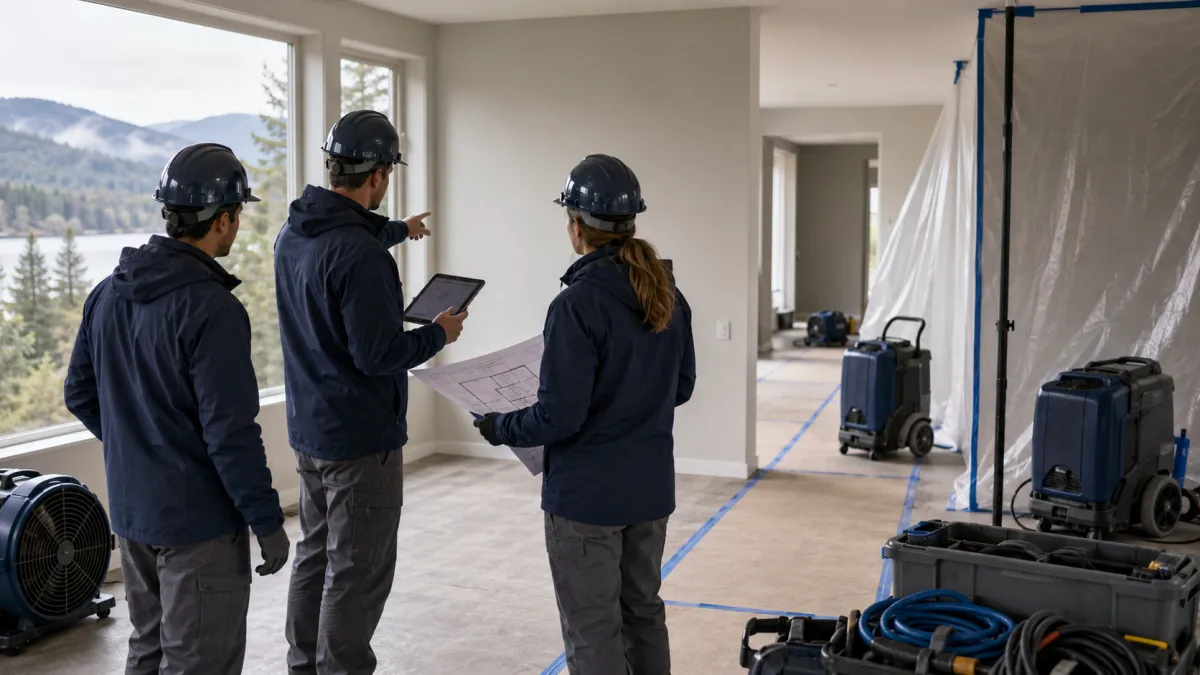
When two or more people are working on a site, a brief coordination conversation can prevent significant confusion. Who is working in each area? Which tasks will happen first? What equipment will move? Are other trades or occupants expected? What conditions require a pause or a second set of eyes?
This conversation creates a shared mental map. Team members know where others are, how their work overlaps, and where communication will be especially important.
Make updates specific and actionable
A useful update explains what changed and what the change requires. Instead of saying only that there is an issue, the message should identify the location, current condition, immediate concern, and decision needed. Photos, measurements, or a short video call can add context when words alone are not enough.
Specific updates help supervisors and office teams respond more efficiently. They also make it easier to document the decision and share consistent information with the customer.
Use closed-loop communication
Sending a message is not the same as completing communication. Closed-loop communication includes confirmation: the recipient acknowledges the update, repeats or summarizes the action, and knows who owns the next step.
This is especially important for safety changes, access instructions, schedule adjustments, equipment movement, and customer commitments. A simple confirmation can prevent two people from acting on different versions of the plan.

Connect the field, office, and customer
Field teams see conditions firsthand. Office teams coordinate schedules, records, vendors, and customer communication. Each group holds information the other needs. Strong projects create reliable pathways between them instead of expecting one person to carry every detail from memory.
Customers also benefit from coordinated communication. They should not have to piece together the project by asking several people the same question. When the internal team is aligned, customer updates can be clearer, more consistent, and easier to trust.
Create a culture where questions are welcome
People need to feel comfortable saying that an instruction is unclear or that a condition has changed. Leaders support this by responding calmly, asking useful questions, and treating clarification as part of professional work.
At Landall, communication supports every value we care about. It strengthens teamwork, makes accountability visible, improves safety decisions, and helps us honor our commitment to customers. Clear communication protects more than the schedule-it protects people and the quality of the work.
For additional information
Please visit our Facebook page at Landall Enterprises or follow us on Instagram @landall_enterprises